
3D Scanning to Secure the Future of the Viking Ships
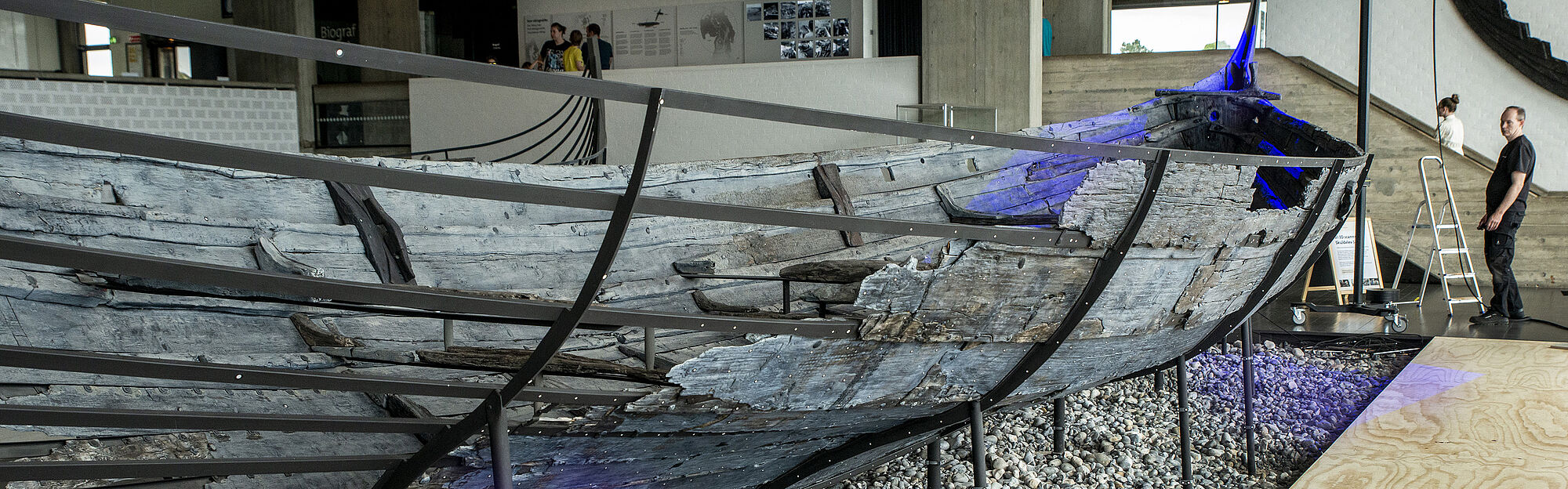
To help safeguard some of Denmark’s most valuable cultural heritage treasures for future generations, the Viking Ship Museum has carried out an extensive digital documentation project of the Skuldelev Ships. The five Viking ships have been 3D scanned in preparation for their upcoming relocation to a new exhibition building. Here, they will be better protected against the climate change and natural forces that are increasingly challenging the museum’s current location by Roskilde Fjord.
The Challenge
At the museum where the Skuldelev Ships are currently displayed, there is an increasing risk of storm surges. As a result, they will be moved to a new museum building further inland.
However, moving five Viking ships dating all the way back to the 11th century requires more than ordinary caution, as the ships are of great importance to Danish history and our shared cultural heritage. Therefore, a precise documentation basis is required before they can be relocated safely.
"It is exciting to get an insight into an industry that geeks out over old ships and is enthusiastic about what we do and what they can use our data for. It is fascinating when the high-tech world meets history in this way. It has been an exciting opportunity for us to go out and scan the ships,” says Kasper Fedde Krogh, CTO at Zebicon A/S.
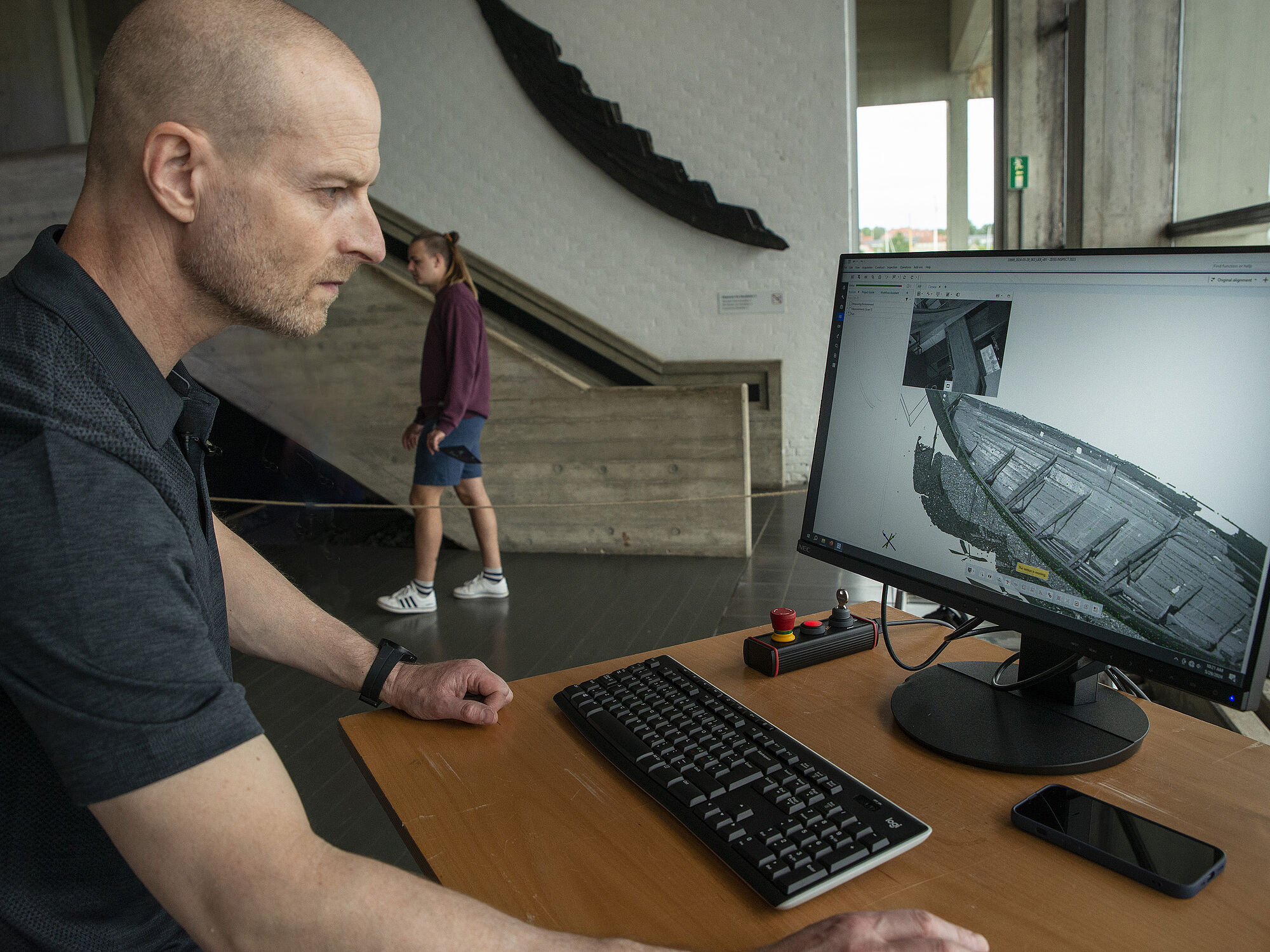
When the ships were excavated and recovered from Roskilde Fjord in 1962, 3D scanners did not exist to document the ship components. Therefore, each individual part was measured and drawn manually at full scale. The foil drawings from the 1960s remain the most accurate documentation of the individual ship components, as they were produced before the parts underwent conservation. With the digital 3D scans, however, the museum now has, for the first time, a complete documentation of the ships as they are assembled and displayed today. This new digital foundation can be used in connection with the upcoming relocation, monitoring the ships’ state of preservation, and creating new reconstructions.
Project
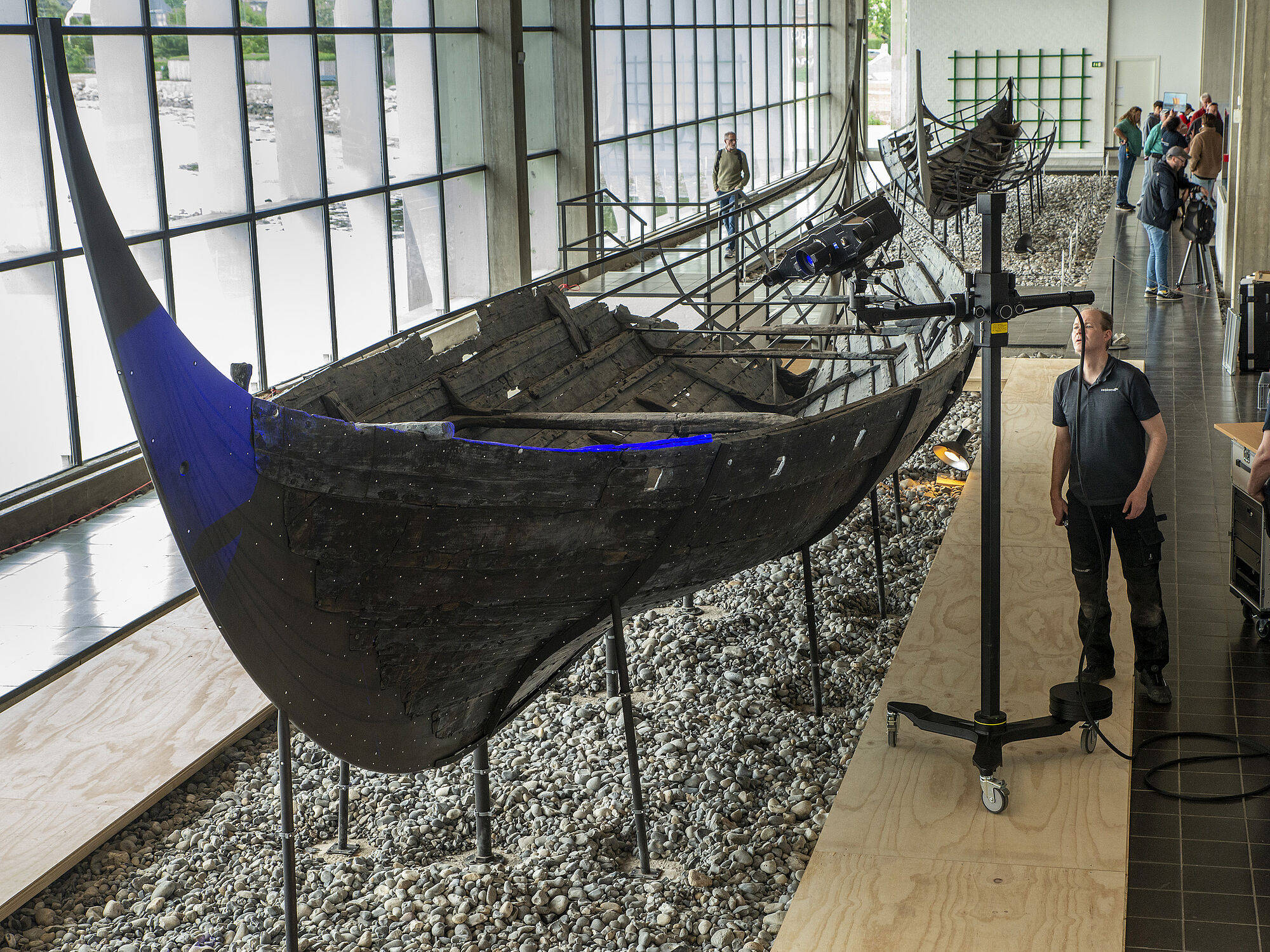
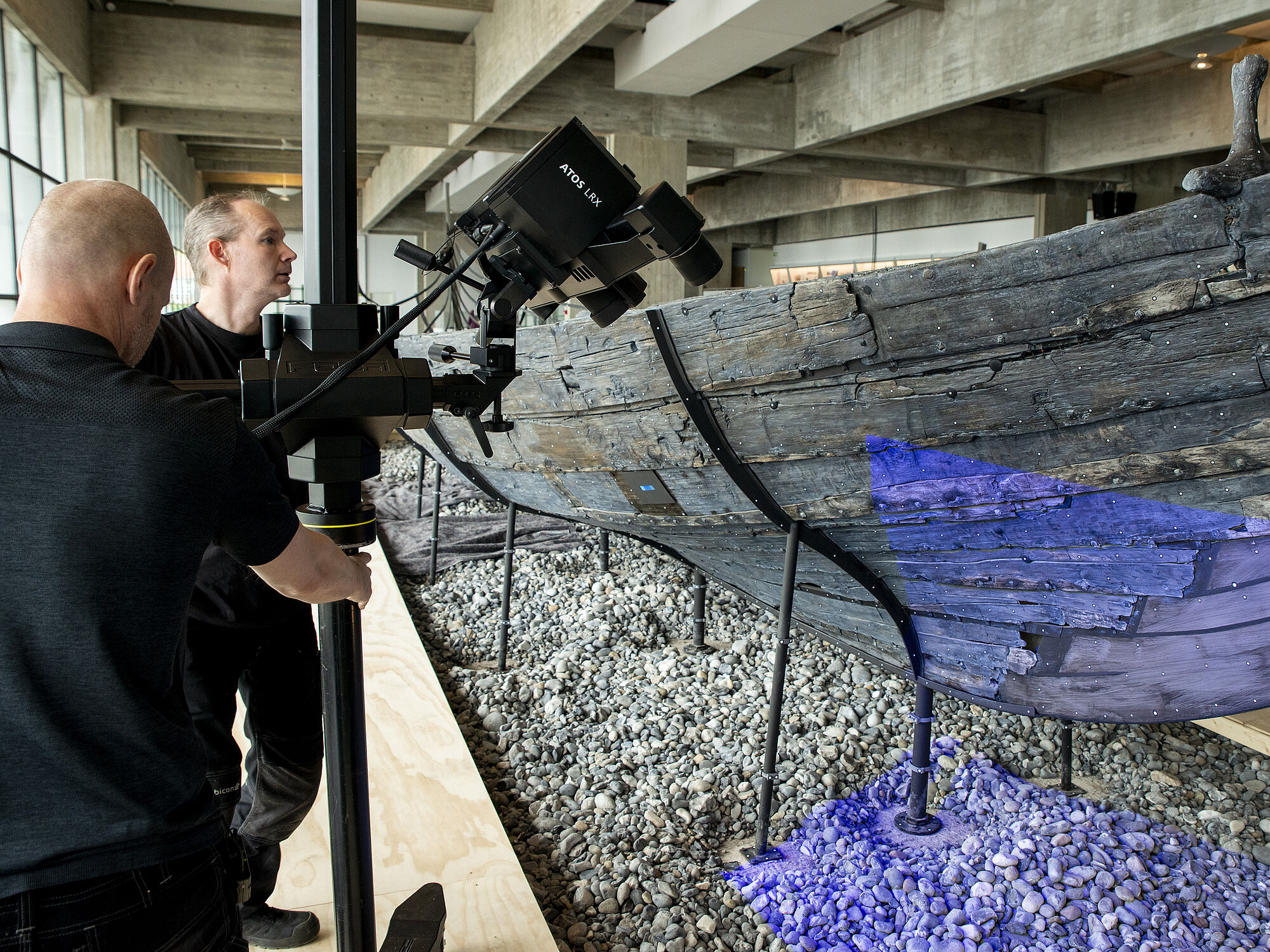
Zebicon 3D scanned the ships, which vary significantly in size. The largest ship is 30 metres long, 3.8 metres wide, and has a draught of 1 metre. The smallest is 11.2 metres long, 2.5 metres wide, and has a draught of approximately 0.5 metres.
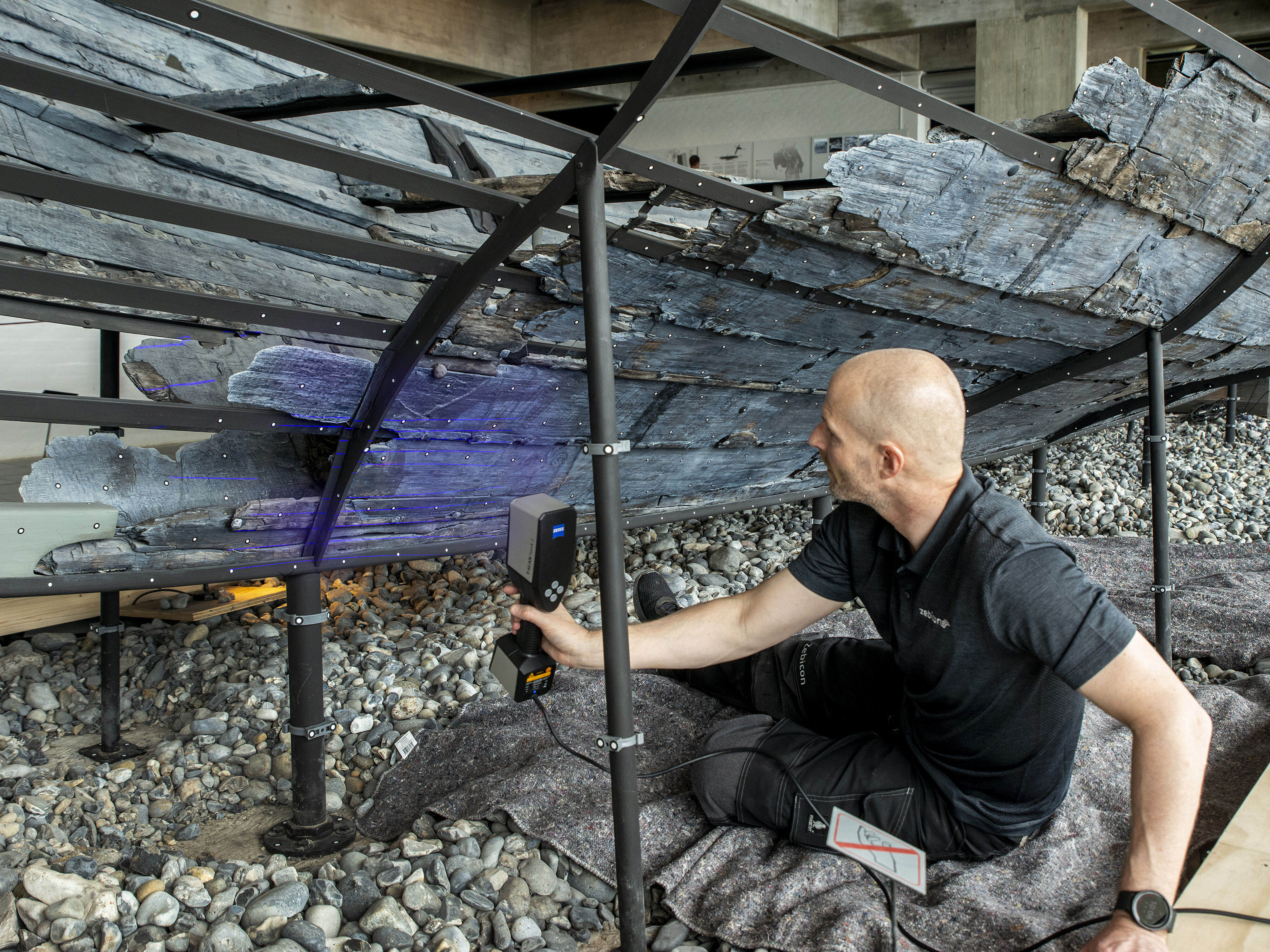
Due to the ships’ size and positioning, the project was carried out using several different scanning methods. First, the TRITOP photogrammetry system was used to establish a precise reference framework. The ships were then 3D scanned using the ATOS LRX, which is well suited for efficient data acquisition on large objects. In addition, the handheld 3D scanner ZEISS T-SCAN hawk 2 was used for areas that the larger systems could not access – including underneath the ships.
Results
The scans will form the basis for the custom-designed support structures and transport crates that will be built for each individual ship, enabling the 1,000-year-old vessels to be moved safely to the new exhibition building.
“It is always interesting to work with history in this way, especially when it involves something of such significant preservation value. You have to take care of these objects and handle them with great caution,” explains Kasper Fedde Krogh, Zebicon A/S.
At the new museum, the ships will be protected from the forces of nature. At the same time, the scans provide the museum with a digital foundation that can also be used for future research.
Relaterede sider
![[Translate to English:] 3D scanning](/fileadmin/_processed_/3/0/csm_2022_ATOS-LRX_Image_MMG_PKF6288_sRGB__1__7e9b97c34c.jpg)
![[Translate to English:] 3D scanner, ATOS LRX](/fileadmin/_processed_/0/c/csm_GOM_ATOS_LRX_01072022_001_Light_1044ff59a3.png)
![[Translate to English:] T-SCAN hawk 2](/fileadmin/_processed_/b/2/csm_3_x_T-SCAN_hawk_2_84221aafc8.jpg)
![[Translate to English:] Fotogrammetri](/fileadmin/user_upload/3_Cases/Fotogrammetri/Vindmoelletaarn/Case_vindmoelletaarn_11.jpg)
Photogrammetry
Photogrammetry is optical 3D coordinate measurement. The technology is used for quality control of large parts, verification of fixtures and hand held tools as well as static deformation analysis.